What Is a Form 10-K? The Annual Report Explained (2026)
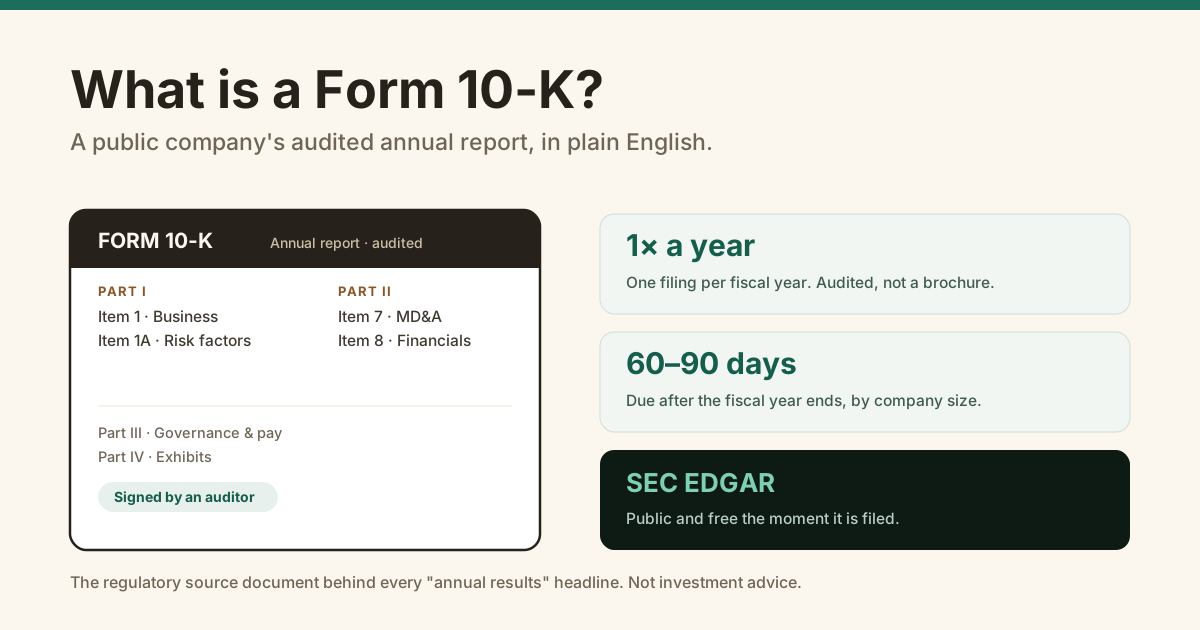
A Form 10-K is the big audited annual report every public company files with the SEC. It lays out the whole business in one document: what the company does, what could go wrong, and a full set of financial statements that an outside auditor has signed off on.
If you want to actually understand a company, this is the filing you read. Not the glossy annual report with the photos, the 10-K. It is longer, plainer, and legally required to tell you the truth.
So think of it as the company's yearly physical. Once a year it has to strip down, get examined, and hand you the full chart. And unlike a press release or an earnings call, it cannot just show you the good parts.
What is a Form 10-K, really?
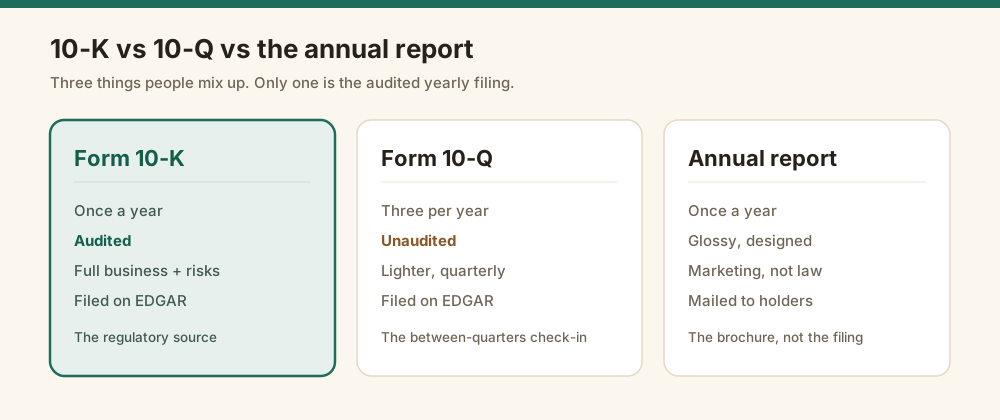
Let me clear up the most common mix-up first. There are two things people call an "annual report."
One is the pretty, glossy booklet a company mails to shareholders, full of photos and a friendly letter from the CEO. The other is the 10-K, filed with the SEC. Guess which one has to be honest?
The 10-K is the legal one. It exists because the Securities Exchange Act of 1934 requires public companies to disclose their financial condition and operations every year, in a standard format, so investors can actually compare one company to another. The SEC's own glossary describes it as the report that gives a comprehensive summary of a company's performance.
And here is what makes it different from almost everything else a company says. The financial statements inside a 10-K are audited. An independent accounting firm has examined the books and put its name on them. That does not make fraud impossible, but it raises the bar a long way above a marketing deck.
So when you read a 10-K, you are reading the version of the company that its lawyers and auditors were willing to sign. That is why it is the starting point for any serious look at a business.
What is actually inside a 10-K?
A 10-K can run over a hundred pages, which scares people off. But it is built from the same handful of parts every time, and once you know them, you can jump straight to what you need.
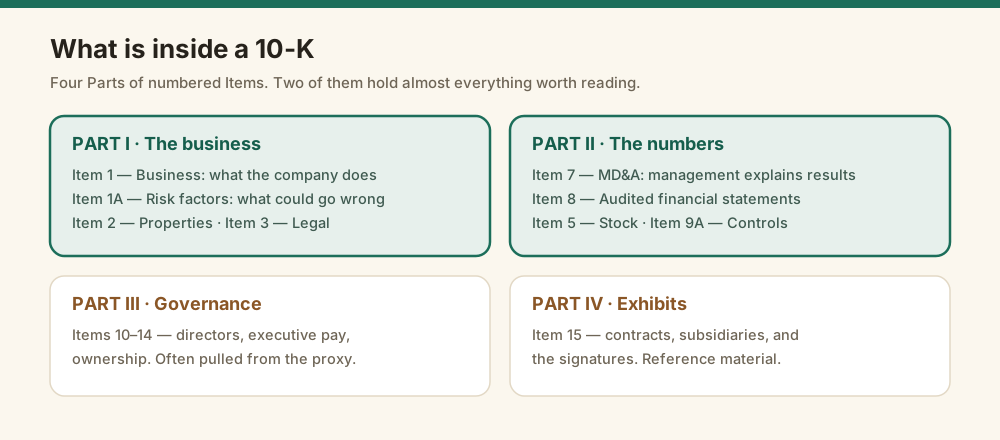
Item 1 is the Business. This is the company explaining, in plain language, how it actually makes money, what it sells, who its customers are, and how it fits in its industry. If you are new to a company, start here.
Item 1A is the Risk Factors. This is the section where the company has to spell out, in writing, everything that could hurt it. Competition, lawsuits, debt, key-customer concentration, regulation, you name it.
Now, a lot of Risk Factors are boilerplate that every company copies. But read them anyway, because the specific ones, the risks written for this company and no other, are often the most honest paragraphs in the whole document.
Item 7 is the MD&A, short for Management's Discussion and Analysis. This is management walking you through the numbers in their own words: why revenue moved, where margins went, what they are worried about. It is the bridge between the plain-English story and the raw financial statements.
And Item 8 is the main event: the audited Financial Statements. The income statement, the balance sheet, the cash flow statement, plus the footnotes, which is where a surprising amount of the real story hides.
A few other items are worth knowing by number. Item 3 covers Legal Proceedings, so any serious lawsuit shows up there. Item 9A covers Controls and Procedures, where the company has to state whether its internal financial controls actually work. A company admitting a "material weakness" in Item 9A is quietly telling you its own numbers might not be reliable, which is a much bigger deal than most headlines make of it.
You do not have to take my word for the structure, either. The SEC publishes the full Form 10-K instructions, which list every item a company has to answer and in what order.
And do not skip the footnotes to the financial statements. They look like fine print, but they are where a company explains its accounting choices, its debt terms, its lease obligations, and the assumptions behind the headline numbers. Plenty of trouble has been spotted in a footnote years before it hit the front page.
One more habit worth building: read the auditor's report itself, the short letter at the front of the financial statements. Most of the time it gives a clean, "unqualified" opinion, which is exactly what you want to see. But if the auditor adds a "going concern" note, they are formally doubting the company can survive the next twelve months. That single sentence outranks almost anything the CEO writes in the rest of the document, and it is the kind of thing a careful reader never misses.
Which parts of a 10-K should you actually read?
Here is the honest answer. Almost nobody reads a 10-K cover to cover, and you do not need to either.
What you do is read it with a question in mind, then jump to the section that answers it. The 10-K is built for exactly that.
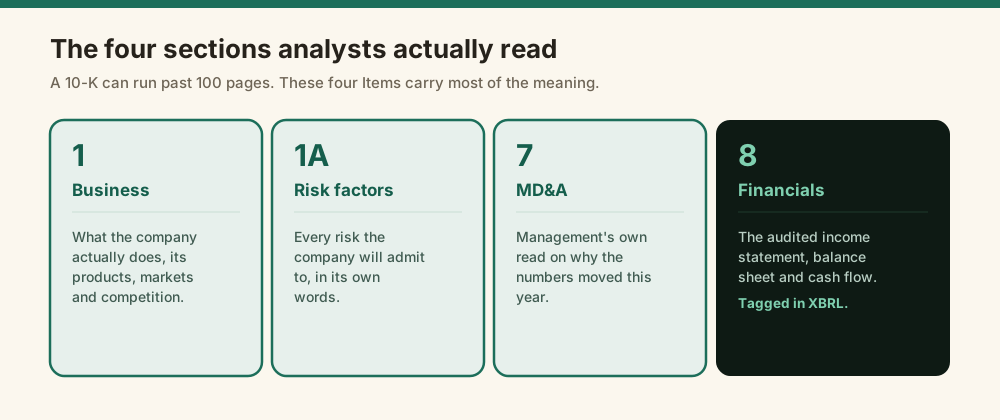
Want to know what the company does? Item 1. Want to know what keeps management up at night? Item 1A. Want the numbers and the story behind them? Items 7 and 8, read together.
My own habit is to read the Risk Factors first, before the happy talk in the Business section. It is a good antidote. The company has to be candid there in a way it never is in a press release, so it tells you where the soft spots are before anyone tries to sell you.
Then I go to the MD&A and the cash flow statement. Profit can be massaged with accounting choices. Cash is harder to fake, and the MD&A tells you how management explains the gap between the two.
When is a 10-K due?
This is where a lot of people get confused, because the deadline is not one number. It depends on how big the company is.
The SEC sorts filers into three sizes by "public float," which is just the market value of the shares held by outside investors. The bigger you are, the faster you have to file, because your numbers matter to more people.
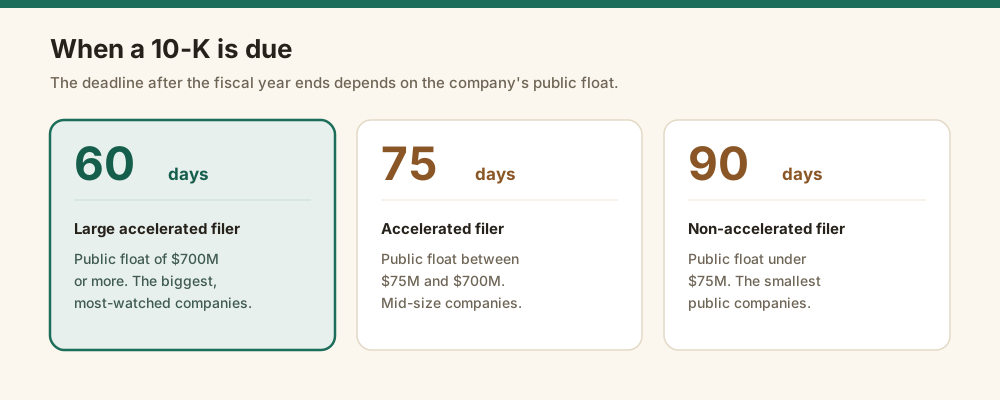
| Filer size | Public float | 10-K deadline |
|---|---|---|
| Large accelerated | $700 million or more | 60 days after fiscal year end |
| Accelerated | $75 million to $700 million | 75 days |
| Non-accelerated | Under $75 million | 90 days |
So a mega-cap with a December fiscal year end has to file its 10-K by around the end of February. A small company gets until the end of March. Neither is late, they are just on different clocks.
One more thing that trips people up: the fiscal year is not always the calendar year. Plenty of companies close their books in June, or September, or the end of January. So a 10-K can land at any time of year, and the deadline runs from that company's own year end. If the exact clock for every filing is your thing, I laid them all out in the SEC filing deadlines guide.
How is a 10-K different from a 10-Q or an 8-K?
These three get mixed up constantly, so let me put them side by side. The cleanest way to keep them straight is depth and timing.
| Form 10-K | Form 10-Q | Form 8-K | |
|---|---|---|---|
| What it is | Annual report | Quarterly report | A single material event |
| How often | Once a year | After the first 3 quarters | Whenever news happens |
| Audited? | Yes | No (reviewed) | No |
| Depth | The whole business | A quarter's results | One announcement |
Here is how they fit together over a year. You get one 10-K, then three 10-Qs for the other quarters, and an 8-K sprinkled in whenever something material happens between those reports.
The 10-K is the deep, audited, once-a-year picture. The 8-K is the real-time news alert. And the 10-Q sits in between, a lighter, unaudited quarterly check-in. Read the 10-K to understand a company, and watch the 8-Ks to keep up with it.
What a 10-K will not tell you
For all its detail, a 10-K has real blind spots, and knowing them keeps you from over-trusting it.
First, it is backward-looking. It describes the year that just ended, audited and complete, but it is history, not a forecast. A great 10-K can come right before a terrible year.
Second, it comes out once a year and can be weeks stale by the time you read it. That is exactly why the faster filings exist. An 8-K catches the big events between annual reports, and insider Form 4 filings show you what the people running the company are doing with their own money right now.
Third, the tone is carefully managed. Every word was reviewed by lawyers, so the Risk Factors can read like a mountain of vague what-ifs written to cover the company legally rather than to inform you. Your job is to find the handful of risks that are specific and real inside all that boilerplate.
How do you use 10-Ks in practice?
Start with the one company you know best, maybe one you own or one you use every day. Pull up its latest 10-K and just read Item 1 and Item 1A. You will learn more in twenty minutes than a month of headlines gives you.
Here is a move worth stealing once you are comfortable. Pull two years of the same company's 10-Ks and read the Risk Factors side by side. A risk that got newly added, or one that jumped from a single line to three full paragraphs, tells you exactly what management started worrying about this year. What changed between filings is often more revealing than any single filing on its own.
Where do you find them? Every 10-K is free on SEC EDGAR the moment it posts. You can search any company and pull its full filing history for nothing. The catch is that a raw 10-K is a wall of text and XBRL tags, not a clean set of numbers you can compare across companies.
That is the gap a data tool fills. Instead of digging the income statement out of a hundred-page PDF, you get it as clean, comparable numbers. The Superinvestors tracker lets you see what the big funds hold and follow them for free, and if you build software, the Edgrapi API returns parsed 10-K financials as JSON so you can screen thousands of companies without reading a single PDF.
Once you get comfortable with the 10-K, the rest of the filing world opens up. The sister guides on the 13F, Form 4 insider trades, and the S-1 each break down another piece, and the guide to SEC filing types maps the whole thing.
So do not let the length scare you off. A 10-K is long because it is complete, and complete is exactly what you want when real money is on the line. Learn the four sections that matter, read it with a question, and it becomes the most useful document a company will ever hand you.
See any company's financials free →
Edgrapi surfaces public SEC filings for research. It is not investment advice.
Frequently asked questions
What is a Form 10-K?
A Form 10-K is the audited annual report every US public company files with the SEC. It describes the business in full, lays out the risks management sees, and includes the audited financial statements for the fiscal year. It is the regulatory source document filed on EDGAR, not the glossy brochure a company mails to shareholders.
What are the main sections of a 10-K?
A 10-K has four Parts made of numbered Items. The four analysts actually read are Item 1 (Business), Item 1A (Risk Factors), Item 7 (Management's Discussion and Analysis), and Item 8 (the audited financial statements). Part III covers governance and pay, and is often pulled from the proxy statement instead of repeated in full.
When does a company have to file its 10-K?
Within 60 to 90 days of the fiscal year end, depending on size. Large accelerated filers, with a public float of $700 million or more, get 60 days. Accelerated filers between $75 million and $700 million get 75 days. Smaller non-accelerated filers get 90. The fiscal year is not always the calendar year, so check the year end before assuming a filing is late.
What is the difference between a 10-K and a 10-Q?
A 10-K is the annual filing and it is audited. A 10-Q is the quarterly filing and it is not audited. Companies file three 10-Qs a year, one after each of the first three quarters, because the fourth quarter is folded into the 10-K. So the 10-K is fuller and more reliable; the 10-Q is faster and lighter.
Is a 10-K the same as an annual report?
Not quite. The 10-K is the SEC filing, dense and audited. The glossy annual report is a marketing document with photos and a letter from the CEO. Some companies combine them into a '10-K wrap,' wrapping the pretty pages around the real filing, but the numbers you can trust are the ones in the 10-K, not the brochure.
Where can I find a company's 10-K?
Every 10-K is free on SEC EDGAR the moment it is filed. You can read the full document there, or use a tool that extracts just the financial statements. Edgrapi's free financials tool returns the income statement, balance sheet, and cash flow for any ticker at edgrapi.com/tools, without you opening the filing at all.