What Is a 13F Filing? Fund Holdings Explained (2026)
You have seen the headlines. "Warren Buffett just loaded up on this stock." "Michael Burry is betting against the market again." Every one of them traces back to the same boring-sounding document: a 13F filing.
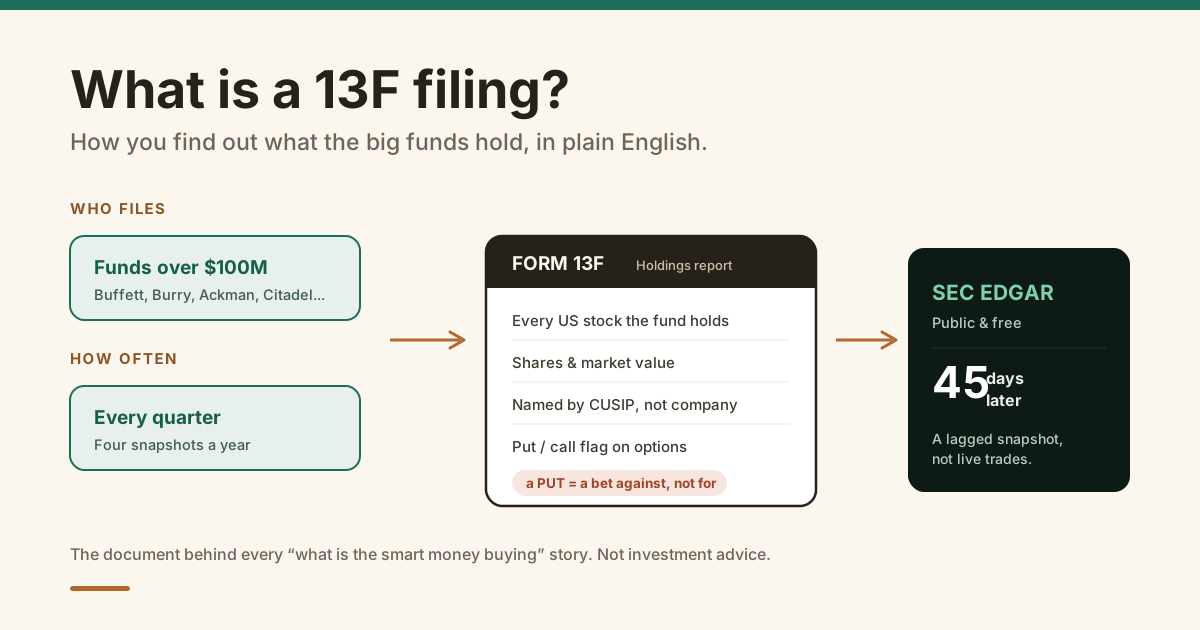
So what is a 13F filing, really? It is a report that big investment managers have to file with the SEC every three months, listing the US stocks they hold. If a firm controls at least $100 million in US-listed securities, the law says it has to show its hand in public, four times a year. That is the entire reason you get to see what Berkshire Hathaway owns.
But here is the thing most people miss. A 13F is powerful and misleading at the same time. It shows you real money's real positions, and it quietly hides half the story while doing it. Read it wrong and you will think a fund is bullish when it is actually betting the other way.
So let me walk you through it properly: what a 13F is, who has to file one, when it lands, what it leaves out, and the one field that fools even financial reporters. By the end, "the smart money is buying" will never push you around again.
What is a 13F filing?
A 13F is a quarterly report in which a large investment manager lists the US stocks it holds. The SEC collects these and publishes them so anyone can see what the biggest players in the market are doing with their money.
Why does it exist at all? Because a firm running tens of billions of dollars can move a stock just by buying it, and the public has an interest in knowing where that money sits. So the rule, written into Section 13(f) of the Securities Exchange Act of 1934, forces the disclosure.
Here is the exact line that matters. According to the SEC's Frequently Asked Questions About Form 13F, a manager must file once its discretionary holdings of covered securities reach "a fair market value on the last trading day of any month of any calendar year of at least $100,000,000."
Read that twice, because the wording is sneaky. It is not $100 million on average, or at year end. It is $100 million on the last trading day of any single month. Cross it once, and you are filing 13Fs for the rest of that year and the first three quarters of the next one.
Cross that line once and your holdings stop being private. That single rule is the raw material behind every "what is the smart money buying" article you have ever read, and behind every tool that tracks famous investors.
Who actually has to file a 13F?
Any institutional investment manager holding at least $100 million in US-listed securities. And "manager" is broader than you might think.
The investor.gov glossary spells out who counts: investment advisers, banks, insurance companies, broker-dealers, pension funds, and even ordinary corporations that manage enough stock. That is why Warren Buffett's Berkshire Hathaway and Michael Burry's Scion Asset Management both show up in the EDGAR system every quarter.
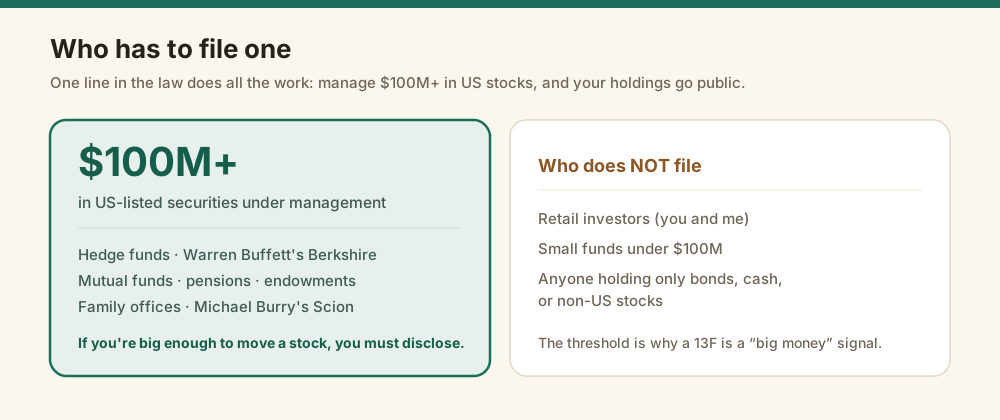
And who does not file? You and me, for a start. Funds under the $100 million line. Anyone whose money sits in bonds, cash, or stocks listed on foreign exchanges, none of which count toward the threshold.
That threshold is the entire point. It is what turns a 13F into a signal about serious institutional money instead of a list of everyone's brokerage account. When you read one, you are reading a firm that was big enough that the SEC decided the public deserved to know.
When are 13Fs due? The 45-day lag that changes everything
A 13F is due within 45 days of the end of each quarter (and the end of the calendar year). So the January-to-March quarter is reported by mid-May, the April-to-June quarter by mid-August, and so on. Four snapshots a year, each one landing about six weeks after the quarter it describes.
Now, why does that 45-day gap matter so much? Because it means you are never looking at what a fund holds today. You are looking at where it stood at the end of last quarter, disclosed a month and a half later.
Think about what can happen in six weeks. A fund can buy a stock, watch it pop, and sell the whole thing before its 13F even hits EDGAR. By the time you read "Buffett bought X," Buffett may have already moved on. That is the single biggest reason a 13F is a tool for finding ideas, not for copying trades in real time.
What a 13F does NOT show (the blind spots)
This is where most people badly overrate the filing. A 13F only lists long positions in US-listed securities. Everything else is invisible.
What is missing? Short positions, where a fund bets a stock will fall. Cash. Bonds. Commodities. Stocks listed on foreign exchanges. And any position too small to bother reporting. A fund can look sleepy and half-empty on its 13F while running an enormous, active book you will never see.
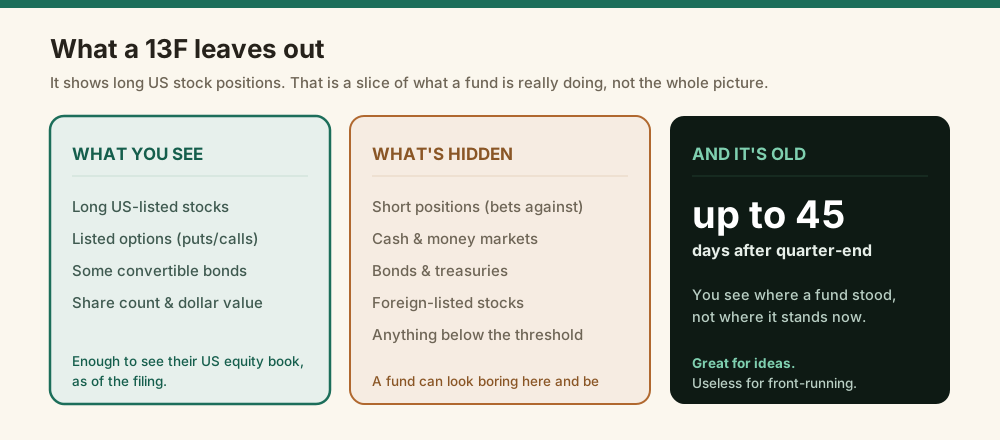
The classic trap is a manager famous for short-selling. Their 13F might look almost bare, because the short bets that made their name do not appear on it at all. What you see is one corner of the strategy, and you mistake it for the whole thing.
There is one more hole worth knowing about. A manager can ask the SEC for confidential treatment of a holding it is still quietly building, which delays that position from showing up at all. Buffett has done exactly this while accumulating a stake he did not want the market front-running. So even the long US positions you can see may not be complete.
So treat a 13F like a photograph taken through a keyhole. It is real, but it is a slice. Never assume the slice is the full picture.
How to read a raw 13F (and why it hurts)
Here is a fun experiment. Go to EDGAR right now, pull up any fund's latest 13F, and try to figure out what it owns. I will wait.
What you will find is a wall of nine-digit codes called CUSIPs, one per holding, with no company names anywhere. There is no portfolio total. There is no comparison to last quarter. Working out that "037833100" means Apple, and that the fund actually trimmed the position since last time, is manual work you do row by tedious row.
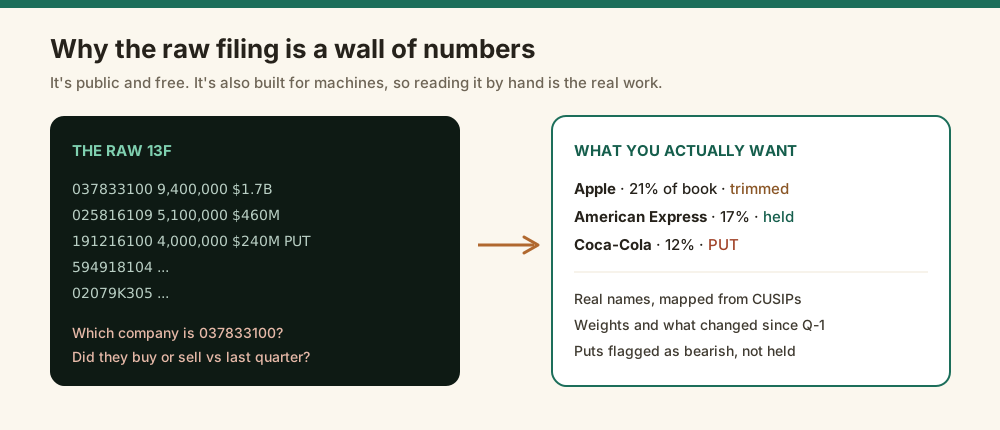
And it gets worse. There is an aggregation catch that quietly breaks most people's math. One stock can appear as several separate rows, because a large firm splits a position across sub-managers or account types. Berkshire lists some of its holdings five times over.
So if you just count rows or add up the raw lines, your totals will be wrong. You have to group everything by CUSIP first, then sum. This is exactly the kind of grunt work a parser should do for you, which is the whole reason the Superinvestors tracker exists.
The 13F put trap: why "Burry is long Nvidia" is usually wrong
This is the one that gets even professionals. A 13F lists option positions the same way it lists stock, and it never spells out the direction of the bet in plain English.
Remember what a put is: a wager that a stock will fall. But on a 13F, a put on a company shows up as a "position" in that company, right next to the plain long holdings. So if you skip the little put/call flag, you read the whole thing exactly backwards.
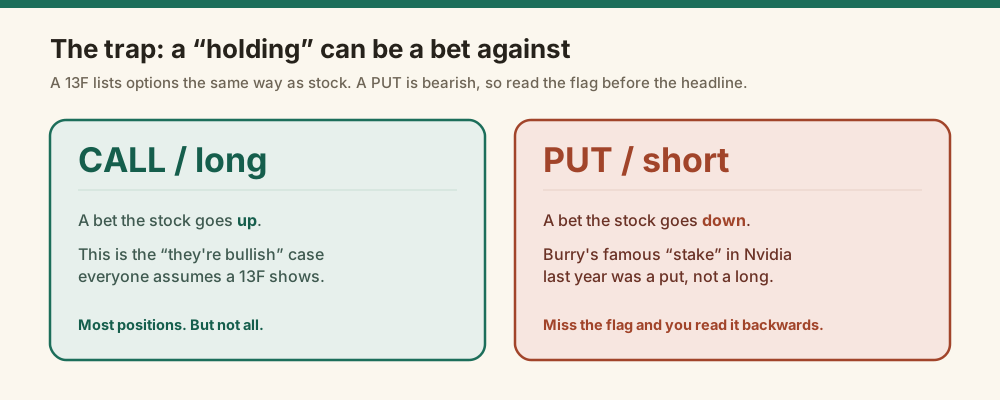
This is precisely why the "Michael Burry is loading up on Nvidia" headlines have been wrong more than once. His position was a put, a bet the stock would drop, not a bullish stake. The flag was right there in the filing. The headlines just did not read it.
So the rule is simple. Before you believe any "big fund is betting on X" story, check whether the position is stock, a call, or a put. One field flips the entire meaning.
13F vs Form 4 vs 13D: which "who owns what" filing is which
The 13F is not the only filing that tells you who owns a stock, and mixing them up is easy. Here is how the three most common ones differ.
| Filing | Who files it | What it tells you | Speed |
|---|---|---|---|
| 13F | Funds with $100M+ in US stocks | The fund's full long US stock portfolio | Quarterly, 45-day lag |
| Form 4 | Company insiders (execs, directors) | A single insider's own buy or sell | Within 2 business days |
| 13D / 13G | Anyone crossing 5% of one company | A large stake in one specific company | Within days of crossing 5% |
The short version: a 13F is the wide-angle shot of a whole fund's portfolio, Form 4 is a close-up of one insider's trade, and a 13D is the alert that someone just took a big stake in a single company. If you want the full map of every filing type, the guide to SEC filing types lays them all out.
How do you actually use a 13F?
Use them for ideas, not orders. Get that one distinction right and you sidestep the mistake almost everyone makes with a 13F.
A good 13F read can show you what a manager you respect was quietly building, which stocks a wave of smart money crowded into last quarter, or what a famous investor dumped when nobody was watching. Then you do your own homework, because remember, the data is six weeks old and only shows half the book.
Where do you find them? Every 13F is free on SEC EDGAR, so you can always read the raw filing yourself. But if you would rather skip the CUSIP decoding and the quarter-over-quarter math, the free Superinvestors tracker shows any fund's latest 13F with real company names, position sizes, exactly what they bought and sold, and puts flagged as bearish. You can even follow an investor and get an email the moment their next 13F lands.
Building something with the data instead? The 13F API guide returns the same parsed holdings as clean JSON, so you can drop them straight into a screen or an app.
What this means for you
Once you actually understand what a 13F is and is not, the headlines lose their grip on you. "The smart money is buying" stops sounding like a command and starts sounding like what it really is: a lagged, partial, US-only snapshot that is a decent starting point and never a signal to act on blindly.
You now know who has to file, when it lands, what it hides, and the one field that flips a bullish-looking position into a bearish one. That already puts you ahead of most of the people writing those headlines.
Want to keep going? The sister explainers on Form 4 insider trades, the 10-K annual report, and the 8-K break down the other filings the exact same way. And when you are ready to see the real thing, pull up any legendary investor's portfolio for free.
See any investor's 13F holdings free →
Edgrapi surfaces public SEC filings for research. It is not investment advice, and 13F holdings do not predict future returns.
Frequently asked questions
What is a 13F filing?
A 13F is a quarterly report that large investment managers file with the SEC listing the US stocks they hold. Any manager with $100 million or more in US-listed securities must file one within 45 days of the quarter's end. It is how the public learns what funds like Berkshire, Scion, or Citadel are holding, straight from a required public disclosure.
Who has to file a 13F?
Any institutional investment manager with at least $100 million in US-listed securities under management. That covers hedge funds, mutual funds, pensions, endowments, and family offices, so Warren Buffett's Berkshire and Michael Burry's Scion both file. Retail investors and funds under $100 million do not, which is why a 13F is a big-money signal.
How often are 13Fs filed?
Once a quarter, four times a year. The deadline is 45 days after the quarter ends, so the Q1 (March) filings land by mid-May, Q2 by mid-August, and so on. That 45-day gap is why a 13F is a lagged snapshot: you are seeing where a fund stood weeks ago, not where it stands today.
What does a 13F not show?
A lot. A 13F only lists long positions in US-listed securities. It hides short positions (bets against a stock), cash, bonds, foreign-listed stocks, and anything below the reporting line. So a fund can look quiet on its 13F while doing plenty you cannot see, which is the biggest reason not to read too much into one.
Why do 13F filings show puts as holdings?
Because a 13F lists option positions the same way it lists stock, without spelling out the bet. A put is a wager that a stock falls, so it shows up as a 'position' even though it is bearish. This is why Michael Burry's headline 'stakes' are often puts, not longs, and why you have to read the put/call flag before assuming a fund is bullish.
Where can I see what investors hold from their 13F?
Every 13F is public on SEC EDGAR the moment it is filed, but the raw filing lists CUSIP codes instead of company names with no comparison to last quarter. A tool that parses it for you is far easier. Edgrapi's free Superinvestors tracker at edgrapi.com/superinvestors shows any fund's holdings with real names and what they bought and sold.