SEC Filing Deadlines: When Every Filing Is Due (2026)
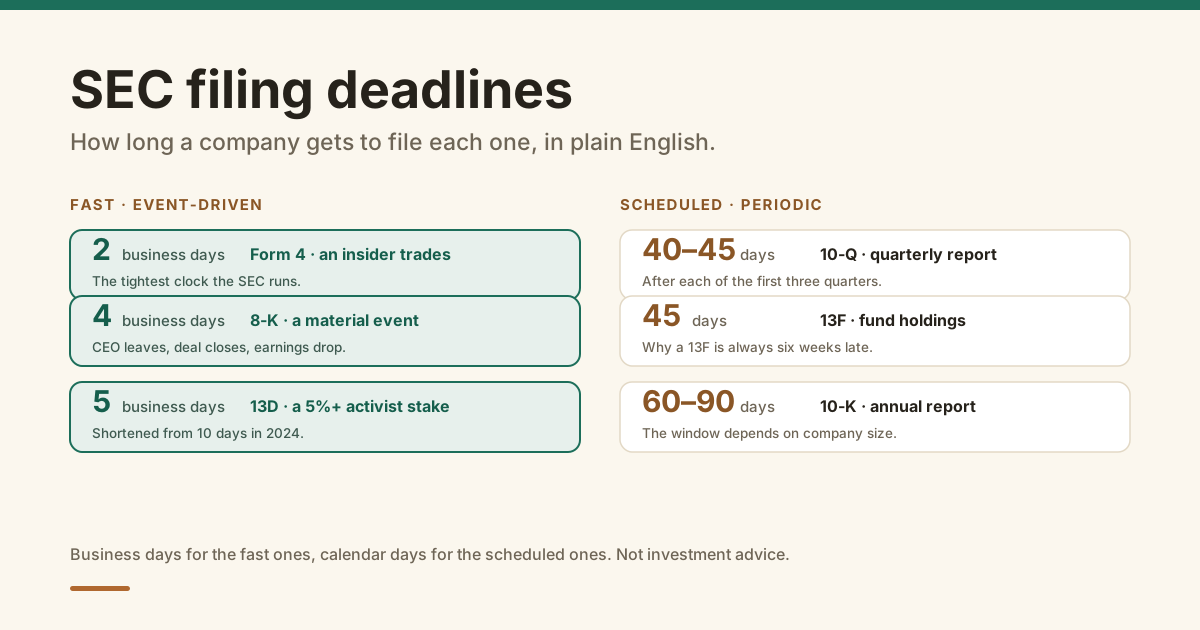
Every SEC filing has a due date, and the dates are all different. A Form 4 has two business days. A 13F has forty-five. A 10-K depends on how big the company is. If you are waiting on a filing, or wondering why the one you want is not out yet, the answer is almost always the deadline.
So let me give you the whole map in one place. This is when each of the common filings is actually due, why the windows are so different, and what happens when a company blows a deadline.
And here is the one idea that ties it all together. Fast filings are for events. Slow filings are for reports. The more a filing is meant to be timely news, the tighter its clock.
The one-page deadline table
Let me just put it all in front of you first. Here is every common filing and its clock, so you can find the one you care about and move on.
| Filing | What it is | Deadline | Counted from |
|---|---|---|---|
| Form 4 | An insider bought or sold stock | 2 business days | The trade |
| Form 3 | Someone became an insider | 10 days | Becoming an insider |
| Form 5 | Year-end insider cleanup | 45 days | Fiscal year end |
| 8-K | A material event | 4 business days | The event |
| 10-Q | Quarterly report | 40 or 45 days | Quarter end |
| 10-K | Annual report | 60, 75, or 90 days | Fiscal year end |
| 13F | A fund's stock holdings | 45 days | Quarter end |
| 13D | An active 5%+ stake | 5 business days | Crossing 5% |
| 13G | A passive 5%+ stake | 45 days (or 5 for some) | Crossing 5% or year end |
Keep that table handy, because the rest of this page is really just the story behind each row. And once the logic clicks, you will not need to look it up again.
Business days versus calendar days
Before we go further, there is one distinction that trips people up constantly. Some deadlines count business days, and some count calendar days. They are not the same thing.
Business days skip weekends and holidays. So a Form 4 filed "within two business days" of a Friday trade is not due Sunday, it is due Tuesday. The fast, event-driven filings all work this way.
Calendar days count everything, weekends included. So a 13F due "within 45 days" of quarter end really means 45 straight days on the calendar. The slower, scheduled reports use this clock.
Why does that matter to you? Because if you are waiting on a filing and counting on your fingers, using the wrong kind of day will have you expecting it too early and wondering why it is late. Match the clock to the filing.
Company reports: 10-K, 10-Q, and 8-K
Every public company files three kinds of report, and they split cleanly into scheduled and event-driven.
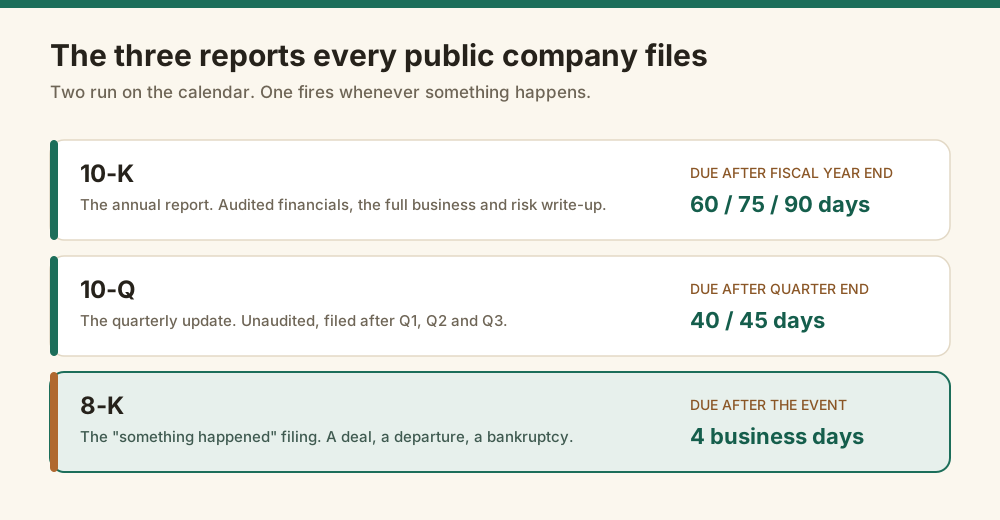
The 10-K is the big annual report, with audited financials and the full business and risk write-up. It is due 60 to 90 days after the fiscal year ends, and I will get to why that is a range in a second.
The 10-Q is the lighter quarterly report, unaudited, filed after each of the first three quarters. It is due in 40 or 45 days, again depending on company size. The fourth quarter does not get its own 10-Q, because the annual 10-K covers it.
And the 8-K is the odd one out. It is not on a schedule at all. It is due within four business days whenever something material happens, whether that is a CEO leaving, a deal closing, or an earnings release. That short window is what makes the 8-K the closest thing to real-time company news on EDGAR.
Why the 10-K deadline depends on company size
So why is the 10-K deadline a range instead of one number? Because the SEC does not treat every company the same. It sorts filers into three sizes and gives the big ones less time.
The sorting is based on "public float," which is just the market value of the shares held by outside investors. The logic is that a huge company has the accounting staff to close its books quickly, and its numbers matter to more people, so it gets the tightest deadline.
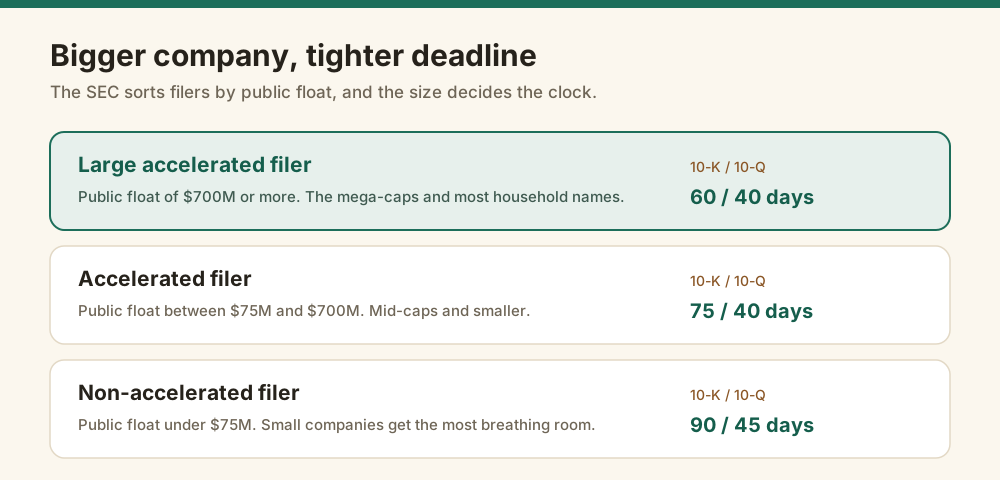
| Filer size | Public float | 10-K | 10-Q |
|---|---|---|---|
| Large accelerated | $700M or more | 60 days | 40 days |
| Accelerated | $75M to $700M | 75 days | 40 days |
| Non-accelerated | Under $75M | 90 days | 45 days |
So when you see a mega-cap file its 10-K in late February for a December year end, and a small-cap take until the end of March, neither one is late. They are just on different clocks, set by their size.
The SEC's own glossary lays out the same tiers if you want the primary source. And remember, all of this runs from the company's fiscal year end, which is not always December.
Ownership filings: Form 3, 4, 5, and the 13s
The other big group of deadlines is about who owns the stock. And this is where the fast clocks live.
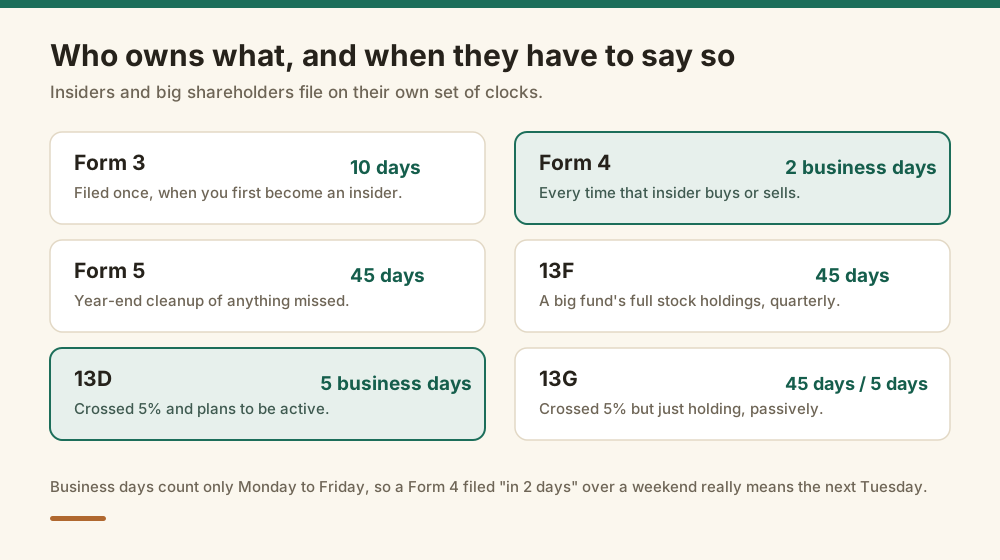
The Form 4 has the tightest deadline the SEC runs: two business days after an insider trades. That is why insider buying and selling shows up on EDGAR almost as it happens. Its siblings are slower, a Form 3 within 10 days of someone becoming an insider, and a Form 5 within 45 days of year end for cleanup.
The 13F is the opposite kind of clock. Big funds get 45 days after the quarter to report their holdings, which is why the "what the smart money is buying" headlines are always about six weeks stale by the time you read them.
The activist filings, 13D and 13G, split on intent. Cross 5% of a company and plan to push for change, and you file a 13D within five business days. Cross the same line but stay passive, and you file the slower 13G. Same threshold, very different clock, because one of them signals a fight.
One thing worth flagging: these ownership deadlines got faster recently. In 2024 the SEC shortened the 13D window from the old ten days down to five business days, and tightened the 13G schedule too. So if you read an older guide that still says "10 days" for a 13D, it is out of date. The whole trend has been toward getting ownership news into the public's hands sooner.
What a single company's filing year looks like
Let me make all of this concrete by tracing one company through a full year. Say it has a December 31 fiscal year end and it is a large accelerated filer, so it is on the tightest clocks.
By late February, it files its 10-K for the year that just closed. Then, roughly 40 days after each of the next three quarters, so around mid-May, mid-August, and mid-November, it files a 10-Q. That is the scheduled backbone: one 10-K and three 10-Qs, spaced across the year.
Now layer the event-driven filings on top. Every time an executive buys or sells stock, a Form 4 lands within two business days. Every time something material happens, a merger, a CFO change, an earnings release, an 8-K lands within four. And 45 days after each quarter, any big fund that owns the stock reports it on a 13F.
Put it all together and a single active company can throw off dozens of filings a year. Most of them are routine. The real skill is knowing which clock produced which filing, so you can tell at a glance whether you are looking at scheduled housekeeping or genuine breaking news.
What happens when a filing is late?
Deadlines have a little give built in, but not much. A company that knows it cannot make its 10-K or 10-Q date can file a Form 12b-25, usually shown on EDGAR as an "NT," which stands for notification of late filing.
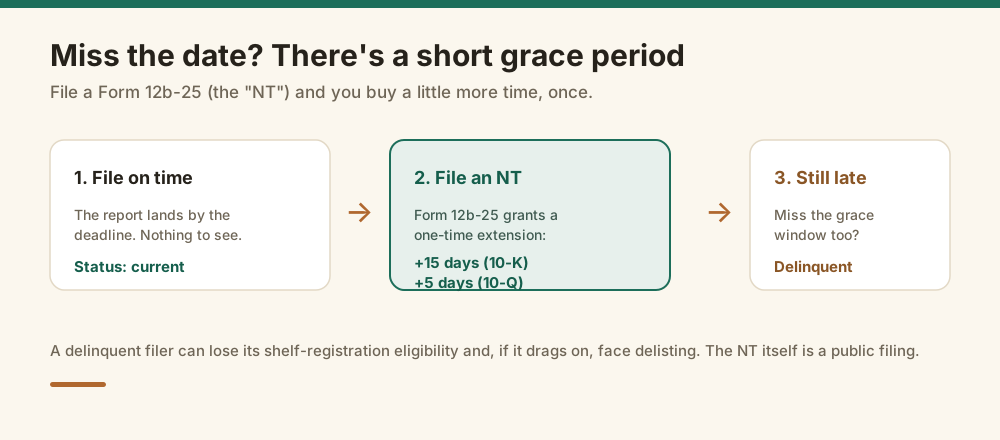
The NT buys a little time: 15 extra calendar days for a 10-K, or 5 extra for a 10-Q. File inside that grace window and the report still counts as on time. You can read the actual Form 12b-25 on the SEC's site if you want to see what it asks for.
But here is the part that matters. Miss that extended window too, and the company is officially delinquent. That is a real problem, not a technicality.
A delinquent filer can lose the ability to raise money quickly through a shelf registration, and if the lateness drags on, it can face delisting from its exchange. And because the NT itself is public, a late filing is not something a company can hide. It has to announce that it is running behind, which is often the first sign that something is wrong under the hood.
So for you as a reader, an NT is a useful early-warning flag. When a company you follow suddenly files one, it is worth asking why its numbers are not ready on time, because the honest answer is sometimes a real problem with the books rather than a simple scheduling hiccup.
Which deadlines should you actually care about?
You do not need to memorize all of these. For most people, three clocks do almost all the work.
If you follow individual companies, the 8-K is your alert system. Four business days means you learn about the big stuff fast, so a fresh 8-K on a company you own is worth opening the day it lands.
If you care what insiders are doing, the Form 4 is the one to watch. Its two-business-day clock makes it the freshest signal in public markets, and a cluster of insider buys is worth knowing about that week, not next quarter.
And if you track big investors, the 13F is your calendar. Its 45-day lag means you plan around it, since the March quarter does not land until mid-May. Knowing that lag keeps you from treating six-week-old holdings as if they were today's trades.
The rest are good to understand, but those three are the ones you will reach for week to week.
How to track deadlines without living on EDGAR
Knowing the deadlines is half the job. The other half is catching the filing when it actually lands, and refreshing EDGAR by hand is a miserable way to do that.
Every filing here is free and public on SEC EDGAR the moment it posts, so you can always check one yourself. But you do not want to sit there hitting reload, waiting for a fund's 13F or a company's next 8-K.
So let the filings come to you instead. The free Superinvestors tracker lets you follow funds and companies, and it emails you when a new 13F, insider Form 4, or 8-K event actually hits. You set it once and stop watching the calendar.
If you would rather understand the filings themselves, the companion guides on the 10-K, 8-K, Form 4, and 13F each go deep on a single one, and the guide to SEC filing types maps the whole system.
So here is where that leaves you. You now know every common filing's clock, why the fast ones use business days and the slow ones use calendar days, and what a late filing really signals. Waiting on a filing will never feel like a mystery again.
Track filings free as they land →
Edgrapi surfaces public SEC filings for research. It is not investment advice. Deadlines here are the standard rules; specific companies can face different dates under SEC orders or exemptions.
Frequently asked questions
When is a company's 10-K due?
A 10-K is due 60, 75, or 90 days after the fiscal year ends, depending on the company's size. Large accelerated filers (public float of $700 million or more) get 60 days, accelerated filers ($75 million to $700 million) get 75 days, and non-accelerated filers (under $75 million) get 90 days. So a December fiscal year end means a big company's 10-K lands by early March.
When is a 10-Q due?
A 10-Q is due 40 days after the quarter ends for accelerated and large accelerated filers, and 45 days for non-accelerated filers. Companies file one after each of the first three quarters; the fourth quarter is covered by the annual 10-K instead, so there are three 10-Qs and one 10-K a year.
How fast does an 8-K have to be filed?
Within four business days of the triggering event. The clock counts business days, so weekends and holidays do not count against it. Some 8-K items, like a Regulation FD disclosure, are due even sooner. That short window is what makes the 8-K the closest thing to real-time company news on EDGAR.
When must an insider file a Form 4?
Within two business days of the trade. Form 4 has the tightest deadline the SEC runs: when a corporate insider (an officer, director, or 10%+ owner) buys or sells the company's stock, they have two business days to report it. That is why insider trades show up on EDGAR almost as they happen.
When is a 13F due?
Within 45 days of the quarter's end. Any institutional manager with $100 million or more in US-listed stocks files a 13F listing its holdings, but the 45-day lag means you are always seeing where a fund stood about six weeks ago, not where it stands today.
What happens if a company files late?
It can file a Form 12b-25 (the 'NT') to get a one-time extension: 15 extra calendar days for a 10-K, 5 extra for a 10-Q. File within that grace window and the report is still treated as timely. Miss it and the filing is delinquent, which can cost the company its shelf-registration eligibility and, if it drags on, lead to delisting.