What Is SEC Form 4? Insider Trades Explained (2026)
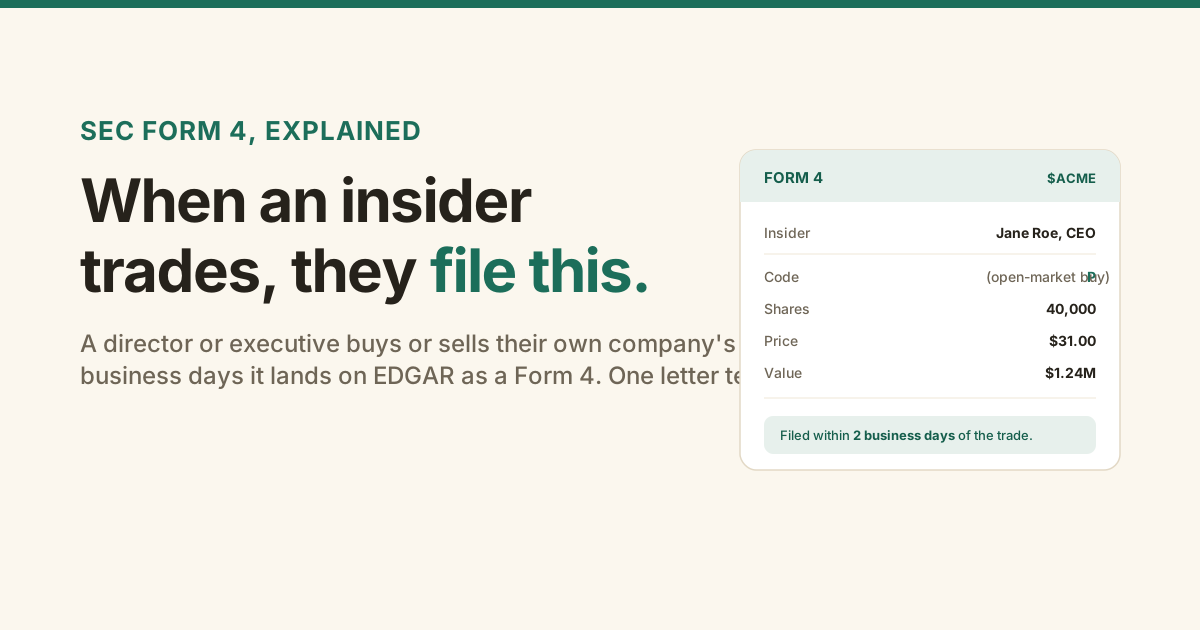
A Form 4 is the report a company insider has to file with the SEC when they buy or sell their own company's stock. Officers, directors, and big shareholders all have to file one, and they have just two business days to do it after the trade.
So it is the closest thing you get to watching the people who run a company vote with their own money. When a CEO buys a million dollars of their own stock, a Form 4 is how the rest of us find out, almost as it happens.
And that speed is what makes it special. Most SEC filings show you the past. A Form 4 shows you what an insider did two days ago, which is about as fresh as public filings get.
What is a Form 4, really?
Let me explain why this filing exists, because the reason is the whole point. The people who run a public company know more about it than you ever will.
They see the sales numbers before the earnings call. They know if a big contract is about to land or fall through. So if they could quietly trade on all that, and you only found out months later, the game would be rigged.
Form 4 is the fix. It comes from Section 16 of the Securities Exchange Act of 1934, which forces insiders to report their trades fast and in public. The SEC's glossary calls it the statement of changes in beneficial ownership, which is a fancy way of saying "an insider's holdings just changed, and here is how."
And here is why you should care as an ordinary investor. You cannot know what the CEO knows. But you can watch what the CEO does, and a Form 4 makes that fully visible. It levels the field a little.
There is a related rule worth knowing. Under the same Section 16, an insider who buys and then sells within six months (or sells and then buys back) has to hand any profit straight back to the company. This "short-swing profit" rule exists to kill the temptation to flip on inside information. It is also one more reason an insider's open-market buy tends to be a genuine, longer-term vote of confidence rather than a quick trade.
Who counts as an insider?
Not everyone at a company has to file a Form 4. The rule is aimed at the people close enough to the top to actually know things.
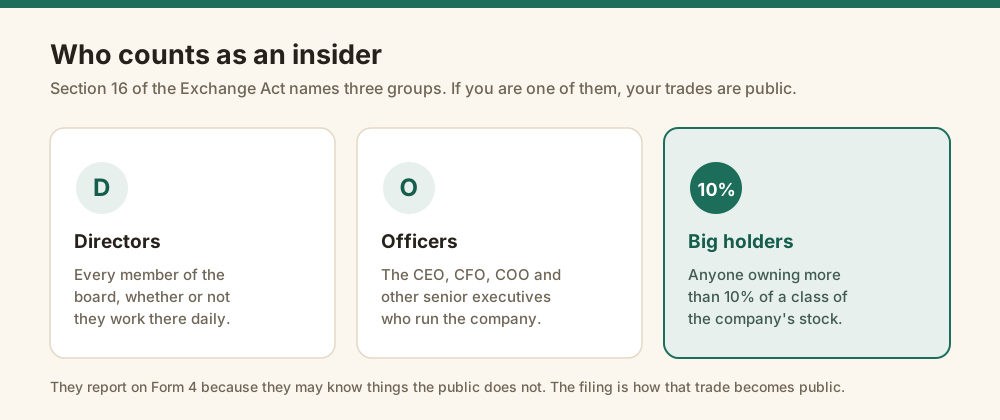
Three groups have to file. First, the officers: the CEO, CFO, and other senior executives. Second, the directors on the board. And third, anyone who owns more than 10% of a class of the company's stock, whether or not they work there.
That third group is why you sometimes see a big fund or a famous activist investor filing Form 4s. Once they cross 10% of a company, they are treated as an insider too, and every trade they make in that stock becomes a two-day filing.
Who does not file? Regular employees, mid-level managers, and outside investors under the 10% line. The whole design is to track the small number of people with real information and real influence, not the entire payroll.
How fast is a Form 4, and why does that matter?
Two business days. That is the tightest deadline the SEC runs, and it did not used to be this fast.
Before 2002, insiders could wait until ten days after the end of the month to report. That meant a trade could stay hidden for weeks. Then the Sarbanes-Oxley Act tightened it to two business days, and insider trading data went from stale to nearly live.
So why does that speed matter to you? Because it turns Form 4 into a signal you can actually use. When a cluster of executives buys their own stock this week, you can know about it this week, not next quarter.
Compare that to a 13F, where a fund's holdings show up 45 days after the quarter ends. A Form 4 is a different animal. It is the fastest window you get into what informed people are doing with their own money, and I broke down every filing's clock in the SEC filing deadlines guide.
The transaction codes that actually matter
Here is the single most important thing to learn about Form 4, and most people skip it. Not all insider trades mean the same thing.
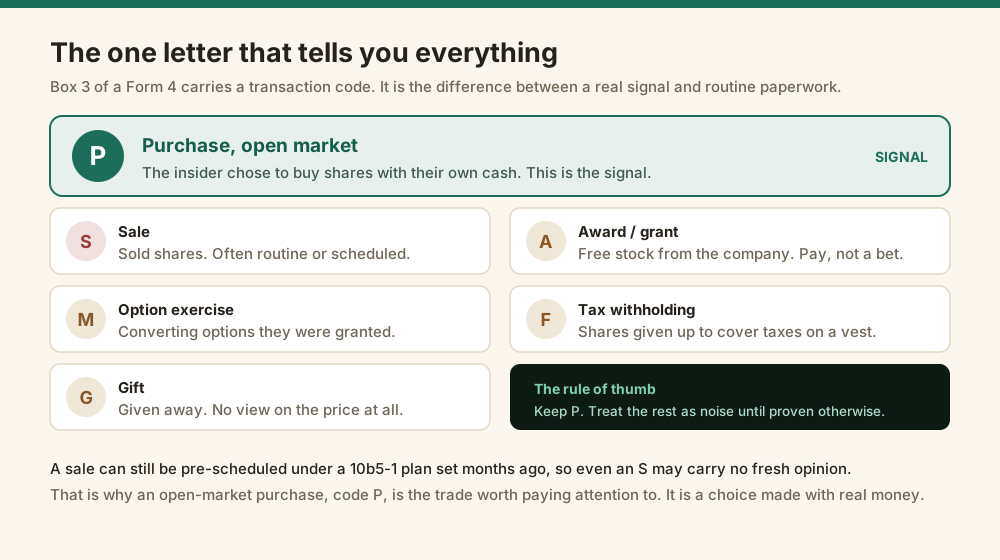
Every transaction on a Form 4 carries a one-letter code, and that code tells you whether the trade is a real decision or just routine paperwork. Learn a handful of these and you can read an insider trade in seconds.
| Code | What it is | How much it means |
|---|---|---|
| P | Open-market purchase | The strongest signal. The insider spent their own cash to buy |
| S | Open-market sale | Depends. Could be conviction, could be a house or a tax bill |
| A | Grant or award | Weak. This is stock the company gave them as pay |
| M | Option exercise | Mechanical. They converted options into shares |
| F | Shares withheld for taxes | Routine. Shares given back to cover a tax bill |
| G | Gift | Usually estate planning, not a market view |
See the difference? A code A grant is the company handing an executive shares as part of their salary. That tells you almost nothing about what they think of the stock.
But a code P purchase is different. The insider took their own money, that they could have spent on anything, and chose to buy more of their own company. That is the trade worth paying attention to.
There is one more trap on the sell side. A lot of insider sales run on a 10b5-1 plan, which is a schedule set up months in advance. So a big code S sale is not always a warning, it might just be a pre-planned diversification. The filing usually flags when a sale was made under one of these plans.
Why insider buying beats insider selling as a signal
Here is an old market saying worth remembering. Insiders sell for a hundred reasons, but they buy for only one.
Think about why someone might sell. They are buying a house. They owe a tax bill. They want to diversify so their entire net worth is not tied up in one stock. A divorce, college tuition, a new business on the side. None of those say a single thing about how the company is doing.
But why would an insider buy more of a stock they already hold plenty of, using their own after-tax cash? Pretty much one reason: they believe it is going higher. That asymmetry is the whole reason a code P purchase carries so much more weight than a code S sale, and why experienced readers barely blink at routine selling but sit up fast for open-market buying.
Form 3 vs Form 4 vs Form 5: the insider family
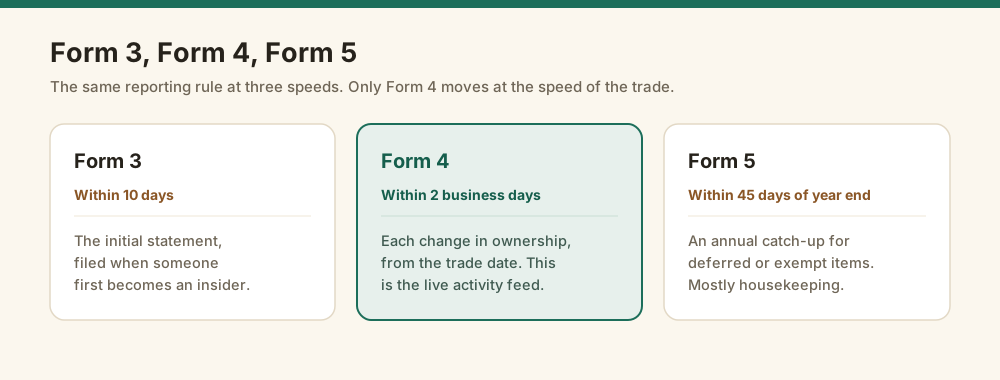
Form 4 has two siblings, and it helps to know how they split the job. They all track insider ownership, just at different moments.
| Form | When it is filed | What it reports |
|---|---|---|
| Form 3 | Within 10 days of becoming an insider | Their starting stake, the baseline |
| Form 4 | Within 2 business days of a trade | Every buy or sell as it happens |
| Form 5 | Within 45 days of the fiscal year end | Small or exempt trades missed during the year |
So Form 3 is the opening snapshot when someone joins the insider club. Form 4 is the running feed of everything they do after that. And Form 5 is the once-a-year cleanup for the little things that did not need a Form 4 at the time.
Of the three, Form 4 is the one you actually watch, because it is where the real-time buying and selling lives.
How do you read a Form 4?
Once you know the codes, an actual Form 4 takes about ten seconds to read. Let me walk you through it.
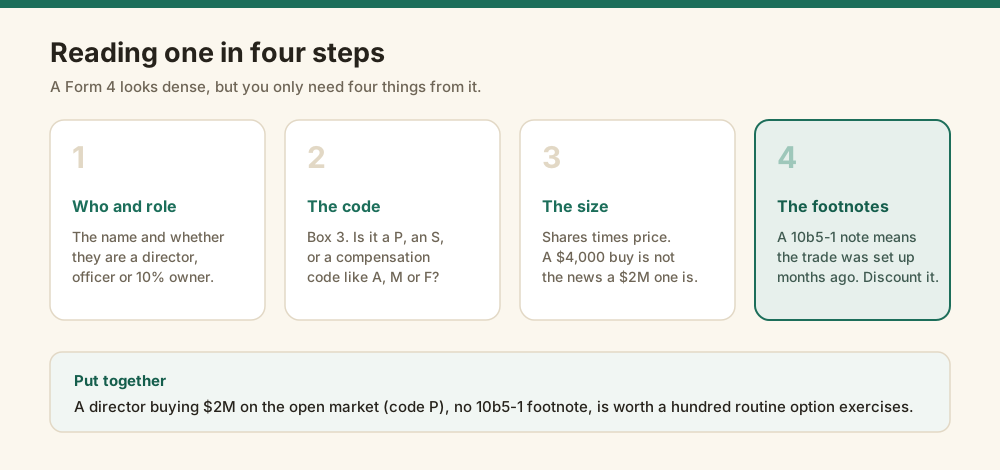
Start with who. The filing names the insider and their role, so you know if this is the CEO or a junior director. A buy from the person actually running the company carries more weight.
Then the code, which you now know cold. Is it a P purchase, an A grant, an S sale? That one letter frames everything else.
Then the size. How many shares, at what price, and, crucially, how big is the trade next to what they already hold? A CEO adding 5% to their stake is a shrug. A CEO doubling their personal position is a statement.
And finally the holdings after. The form shows how many shares the insider owns once the trade settles, so you can see whether they are building a position or quietly heading for the exit.
Which insider signals actually matter?
Not every Form 4 is worth your time, so let me tell you the one pattern that has real history behind it.
It is the cluster buy. One insider buying can be personal, a bonus, a bet, who knows. But when several insiders at the same company all buy in the open market within a short window, that is much harder to dismiss.
Think about it. When the CEO, the CFO, and two directors all reach into their own pockets in the same few weeks, they are all seeing something they like at the same time. Academic studies of insider buying have found that this kind of clustered, open-market purchasing has tended to precede stronger returns than a lone insider trade.
That is not a promise, and none of this is a reason to buy blindly. But a cluster of code P buys is one of the more honest signals in all of public markets, precisely because the people making it are risking their own money.
How do you use Form 4 filings in practice?
You use them as a starting point, not a trigger. A wave of insider buying is a reason to go look closer at a company, not a reason to buy it sight unseen.
Where do you find them? Every Form 4 is free on SEC EDGAR the moment it posts, and the raw Form 4 itself is a public document you can read. The problem is volume. Thousands of Form 4s get filed every week, most of them routine grants and tax withholdings, and digging the real buys out of that flood by hand is brutal.
That is exactly what a tool should do for you. Instead of scrolling EDGAR, you get the open-market buys filtered out and the routine noise dropped. The Superinvestors tracker lets you watch companies and the big investors who own them, and it can email you when an insider makes a real purchase, alongside new 13F holdings and 8-K events.
Once insider trades make sense to you, the rest of the picture fills in. The sister guides on the 13F and the 8-K cover what the funds hold and what companies announce, and the guide to SEC filing types maps every filing in one place.
So here is the takeaway. Learn the codes, watch for open-market buys, and pay real attention when a cluster of insiders buys at once. It will not make you rich on its own, but it puts you on the same side of the glass as the people who actually know the company.
Edgrapi surfaces public SEC filings for research. It is not investment advice.
Frequently asked questions
What is SEC Form 4?
SEC Form 4 is a filing titled Statement of Changes in Beneficial Ownership. A company insider submits it when their holding of the company's stock changes, so a buy, a sale, a grant, or an option exercise. It has to be filed within two business days of the trade and becomes public on SEC EDGAR, which is how the market learns what insiders are doing with their own shares.
Who has to file a Form 4?
Under Section 16 of the Exchange Act, a company's directors, its officers such as the CEO and CFO, and anyone who owns more than 10% of a class of its stock all count as insiders and must file. They report on Form 4 because they may know things the public does not, and the filing is how each of their trades in the company's stock is disclosed.
How quickly must a Form 4 be filed?
Within two business days of the transaction, and the clock starts on the trade date rather than the settlement date. That makes Form 4 close to a live feed of insider activity, far faster than a quarterly report. It is the reason a Form 4 can tell you an insider bought this week, not last quarter.
What do the Form 4 transaction codes mean?
P is an open-market purchase, S is a sale, A is a grant or award from the company, M is an option exercise, F is shares withheld to cover taxes, and G is a gift. P is the only code that means the insider chose to spend their own money on the stock, which is why it is treated as the real signal and the others are usually routine compensation.
What is the difference between Form 3, Form 4, and Form 5?
Form 3 is the initial statement, filed within 10 days of becoming an insider. Form 4 reports each change in ownership within two business days. Form 5 is an annual catch-up for deferred or exempt items, due within 45 days of the fiscal year end. Form 4 is the one that carries live trading activity.
Where can I find Form 4 filings?
They are public on SEC EDGAR the moment they are filed. You can search a single company there, or use a tracker that reads the whole feed and surfaces the notable trades. Edgrapi's free insider radar lists the biggest open-market insider buys across the market at edgrapi.com/insider, no account needed.