Types of SEC Filings: The Complete Guide (2026)
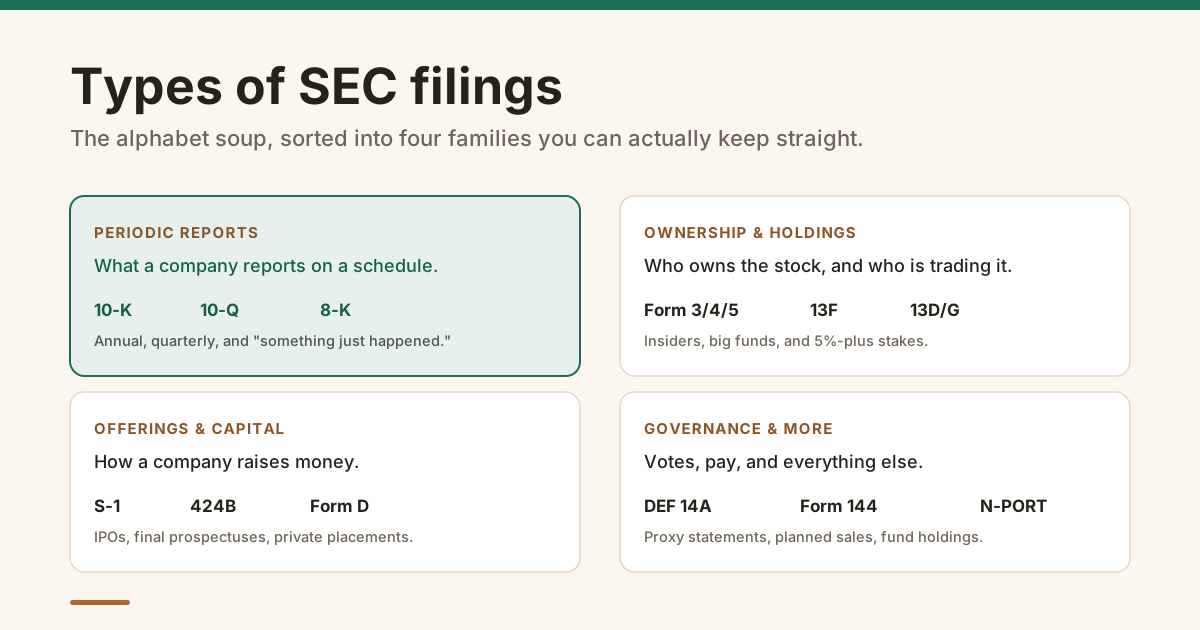
10-K, 8-K, 13F, S-1, DEF 14A. SEC filings read like a stack of license plates, and the numbers do not tell you what any of them are for. But here is the good news: almost every filing you will ever care about falls into one of four groups.
So the types of SEC filings sort cleanly into periodic reports (a company on a schedule), ownership filings (who holds and trades the stock), offerings (raising money), and governance filings (votes and pay). Learn those four buckets and the whole system stops being intimidating.
And once you see the groups, you stop memorizing form numbers and start reading with intent. You do not need to know all hundred-plus SEC forms. You need the dozen that matter and a map of how they fit together.
How SEC filings are organized
Let me clear up why this feels harder than it should. There is no single "types of filings" menu at the SEC where everything is neatly listed. Filings just pile up on EDGAR by the millions.
So the trick is to stop thinking about form numbers and start thinking about who files and why. Every SEC filing exists because a law requires someone to disclose something. A company reporting its results. An insider reporting a trade. A fund reporting its holdings. A business raising money.
Sort by that, by the reason behind the filing, and four families cover almost everything you will run into. The sections below walk through each one in turn, and there is a master table further down with every major form gathered in a single place, each one linked to its full guide.
Common mix-ups worth clearing up
A few of these filings get confused constantly, so let me clear the big ones before we go further.
First, the 10-K is not the glossy annual report with the photos and the friendly CEO letter. That booklet is marketing. The 10-K is the legal, audited version filed with the SEC, and it is the one that actually has to be honest.
Second, a 13F is not a real-time trade feed. It comes out 45 days after the quarter closes, so it always shows you where a fund stood weeks ago, never where it stands today. Treat it as a lagged snapshot, not a live signal.
Third, a 13D is not the same thing as a 13G, even though both mean someone crossed 5% of a company. A 13D signals activist intent, while a 13G is a passive holder simply reporting the stake. The SEC's investor glossary is a handy place to check the exact definition of any form you are unsure about.
Family 1: Periodic reports (10-K, 10-Q, 8-K)
These are what a public company files on a schedule, and they are the backbone of everything you know about a business. Two run on the calendar, and one fires on events.
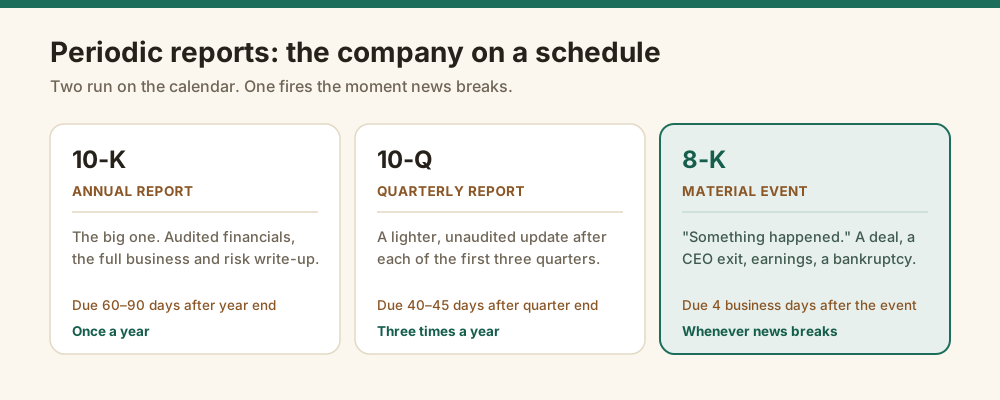
The 10-K is the big one: the audited annual report, with the full financials, business description, and risk factors. If you want to actually understand a company, this is where you start.
The 10-Q is its lighter cousin, an unaudited quarterly update filed after each of the first three quarters. And the 8-K is the odd one out, filed within four business days whenever something material happens, like a CEO leaving or a deal closing.
Think of it this way. The 10-K is the deep once-a-year portrait, the 10-Q is a quick quarterly check-in, and the 8-K is the breaking-news alert in between. Together they keep a company continuously on the record.
Family 2: Ownership and holdings filings
This family answers a different question: not how is the company doing, but who owns it and who is trading it. Three different groups have to disclose.
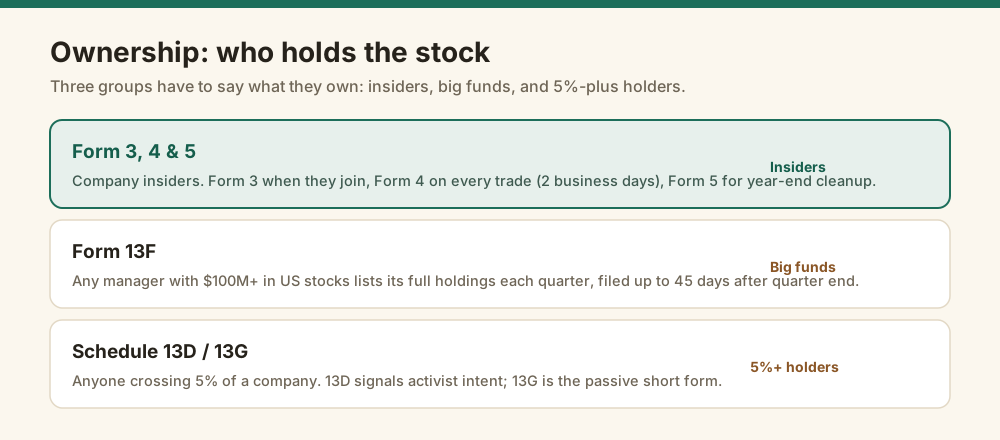
Company insiders file Form 3, 4, and 5. The one you watch is Form 4, filed within two business days of every insider trade, which makes it the freshest signal in public markets. When a CEO buys their own stock, a Form 4 is how you find out fast.
Big funds file a 13F. Any manager with $100 million or more in US stocks has to list its holdings every quarter, though with a 45-day lag, so it is a slower, look-back kind of signal.
And anyone crossing 5% of a single company files a Schedule 13D or 13G. A 13D signals activist intent, someone who might push for change, while a 13G is the passive version for a large but hands-off holder.
Family 3: Offerings and raising capital
The third family is about how a company brings money in, whether it is going public for the first time or raising a private round.
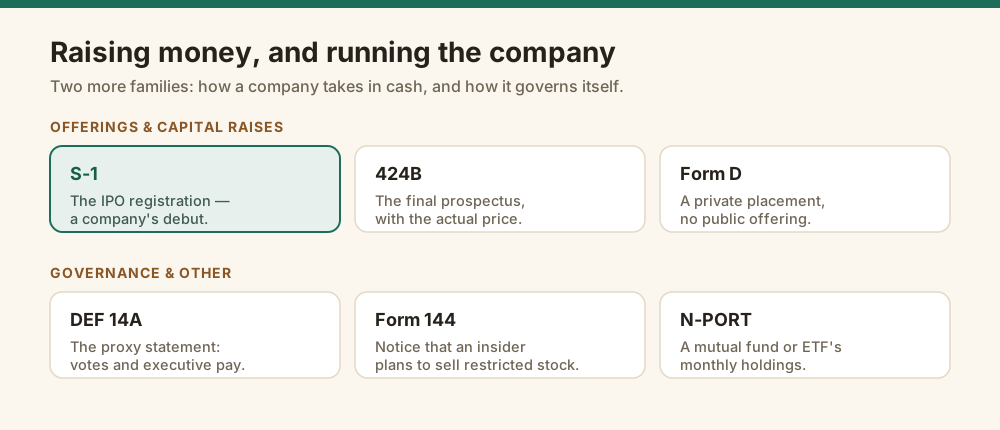
The star of this group is the S-1, the registration statement a private company files to go public. It holds the prospectus, with the company's first audited financials and its risk factors, which makes it the first real look inside a business before its IPO.
The 424B is the S-1 with the final price filled in, filed right after the company prices its offering. And Form D covers private placements, where a company raises money from a small group of investors without a public offering, so you never see a full prospectus for those.
So this family is where you look when the question is not "how is this company doing" but "how is it funding itself, and on what terms."
Family 4: Governance, votes, and everything else
The last family is the grab bag: how a company is governed, plus a few important filings that do not fit the other three.
The big one here is the DEF 14A, the proxy statement. It is filed before the annual shareholder meeting, and it is where you find the things a company would rather bury, most notably exactly how much the executives get paid. If executive compensation interests you, the DEF 14A is the document.
Form 144 is a heads-up that an insider plans to sell restricted stock, filed before the sale rather than after. And on the fund side, N-PORT is a mutual fund or ETF reporting its holdings, which is how you would see inside a fund like an index ETF rather than a hedge fund.
None of these are hard once you know what they are for. They just round out the picture beyond the headline filings.
Every major SEC filing in one table
Here is the whole set on one page, grouped by family. Where a filing has its own deep-dive guide, the name links to it, so you can use this as your map into the rest.
| Filing | Family | What it is for |
|---|---|---|
| 10-K | Periodic | Audited annual report: financials, business, risks |
| 10-Q | Periodic | Quarterly report, unaudited, first three quarters |
| 8-K | Periodic | A material event, within 4 business days |
| Form 3 / 4 / 5 | Ownership | Insider ownership and trades |
| 13F | Ownership | A large fund's quarterly stock holdings |
| 13D / 13G | Ownership | A stake above 5% (activist versus passive) |
| Form 144 | Governance | Notice of a planned insider stock sale |
| S-1 | Offering | IPO registration statement |
| 424B | Offering | Final prospectus, with the offering price |
| Form D | Offering | A private placement, no public offering |
| DEF 14A | Governance | Proxy statement: votes and executive pay |
| N-PORT | Funds | A mutual fund or ETF's holdings |
For when each of these is actually due, the SEC filing deadlines guide lays every clock out side by side.
Which filing answers your question?
Most of the time you are not hunting for "a filing" at all. You have a question, and one form holds the answer. So work backward from the question, and the form number takes care of itself.
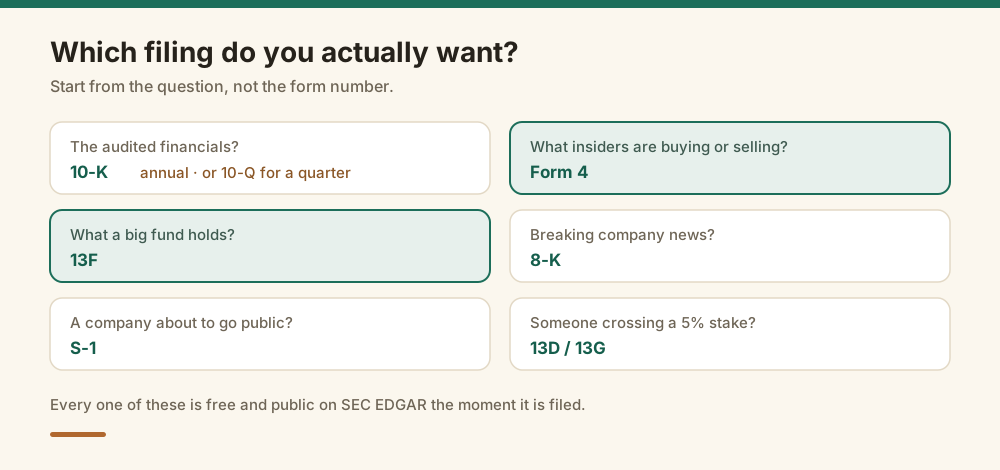
Want the audited financials? Read the 10-K. Want to know what insiders are doing with their own money? Form 4. Want to see what a big fund holds? The 13F.
Want to catch breaking company news? The 8-K. Curious about a company that is about to go public? The S-1. Wondering who just took a big stake in a company? A 13D or a 13G. Every one of those is free and public on EDGAR the moment it is filed.
How to start reading filings today
If all of this is new, do not try to boil the ocean. Pick one company you actually know, ideally one you own or use every day, and read just two filings.
Start with its latest 10-K, and inside it read only Item 1, the business, and Item 1A, the risk factors. That gives you the story and the honest downsides in about twenty minutes. Then pull its last two or three 8-Ks to see what recent news the company itself thought was material enough to announce.
That is genuinely it. One 10-K and a few 8-Ks on a company you care about will teach you more than any summary, because you already have the context to judge what you are reading. Do that once, and the other three families start to click into place fast.
Which filings actually matter to you?
You will never read all of these, and you do not need to. Which ones matter depends entirely on what you are trying to do.
If you invest in individual companies, your core three are the 10-K to understand the business, the 8-K to catch big news, and Form 4 to see what insiders are doing. Those three cover most of what a company will ever tell you.
If you follow the smart money, you live in the ownership family. The 13F shows you what famous funds hold, and Form 4 shows you what company insiders are buying with their own cash. Pair the two and you get both the outside big money and the inside knowledge.
And if you are into IPOs and new listings, the S-1 is your document, since it is the first and fullest look at a company right before it goes public. Everything else is just context around the few filings that fit your goal.
Where do you find and pull SEC filings?
Every filing on this page is free on SEC EDGAR, searchable by company, form type, or date. That works fine when you want to read one filing at a time.
Where it falls apart is scale. Reading a raw 10-K is a slog through a hundred pages of legal text and XBRL tags, and tracking a company's filings as they land means refreshing EDGAR forever. That is the gap a data tool fills.
To pull the common filings as clean, comparable data, the Edgrapi API parses them into JSON, so financials, insider trades, and fund holdings come out as fields instead of PDFs. And if you would rather see the data than write code, the free Superinvestors tracker shows what the top funds hold and lets you follow them, alongside insider buys and 8-K events, for nothing.
So here is the takeaway. Once you know which family a filing belongs to, the SEC's firehose stops being intimidating and starts being a map. Learn the four groups, keep the master table handy, and every one of those cryptic form numbers turns into a document you know how to read.
Edgrapi surfaces public SEC filings for research. It is not investment advice.
Frequently asked questions
What are the main types of SEC filings?
They sort into a few families. Periodic reports (10-K annual, 10-Q quarterly, 8-K for material events) are what a company reports on a schedule. Ownership filings (Form 3/4/5, 13F, 13D/13G) show who holds and trades the stock. Offering filings (S-1, 424B, Form D) cover raising money. Governance filings (DEF 14A, Form 144) cover votes, pay, and planned sales.
What is the most important SEC filing?
For understanding a company, the 10-K annual report. It has the audited financials, the full business description, and the risk factors in one place. For timely news, the 8-K, filed within four business days of a material event. Which one matters most depends on your question: financials point to the 10-K, insider activity to Form 4, fund holdings to the 13F.
How many types of SEC filings are there?
EDGAR recognizes more than 150 distinct form types, but most people only ever need a dozen: 10-K, 10-Q, 8-K, Form 3, Form 4, Form 5, 13F, 13D, 13G, S-1, 424B, and DEF 14A. The rest are specialized filings for funds, foreign issuers, broker-dealers, and one-off events.
Are all SEC filings public?
Almost all of them. Once a company or investor files with the SEC, the filing is public on EDGAR immediately and free to read. A few filings can be submitted confidentially for a limited window (an emerging-growth company can file its S-1 as a draft first), but the standard rule is that a filing is public the moment it lands.
Where can I find SEC filings?
All of them are on SEC EDGAR at sec.gov, searchable by company, form type, or date, and free. The raw filings are built for one-off lookups, not for tracking a pipeline, so many people use an API to pull filings as structured JSON. Edgrapi does that for the common filing types.
What is the difference between a 10-K and an 8-K?
A 10-K is the scheduled annual report, with audited financials and a full business review, filed once a year. An 8-K is unscheduled: it is filed within four business days whenever a material event happens, like an acquisition, a CEO change, or an earnings release. The 10-K is the deep annual picture; the 8-K is the real-time news feed between those reports.