Is Congressional Stock Trading Getting Banned?
Every few months a headline says Congress is about to ban itself from trading stocks.
Then, usually, nothing happens.
This time is a little different. In July 2026 the House actually passed a ban. But before you assume it is over, look at where the bill goes next.
Is congressional stock trading getting banned?
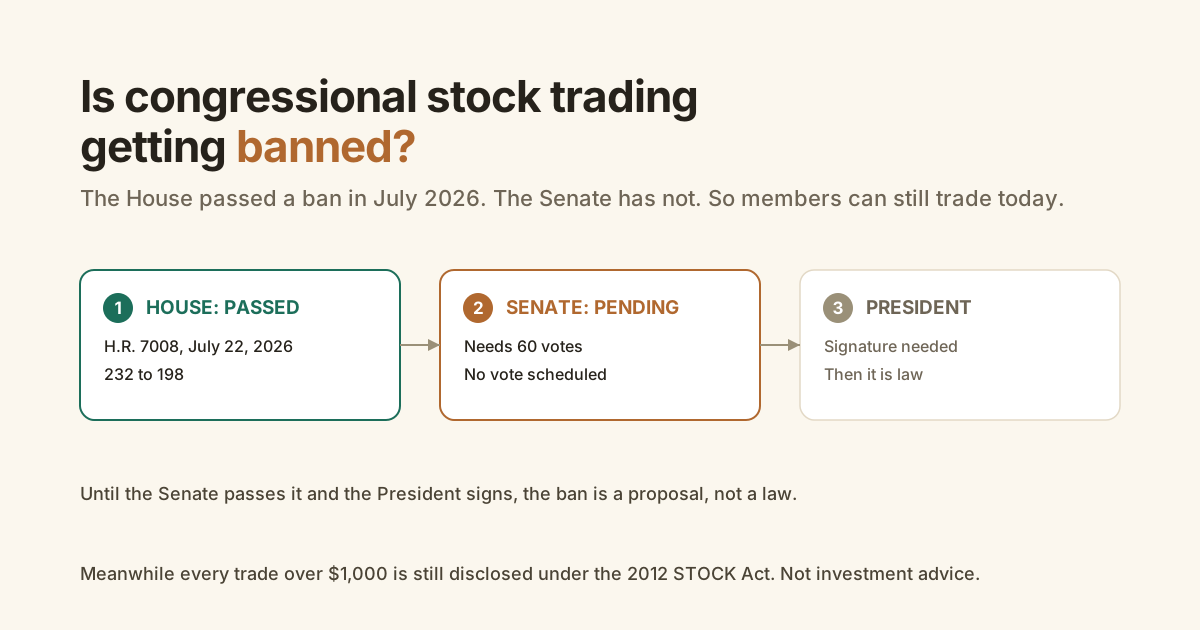
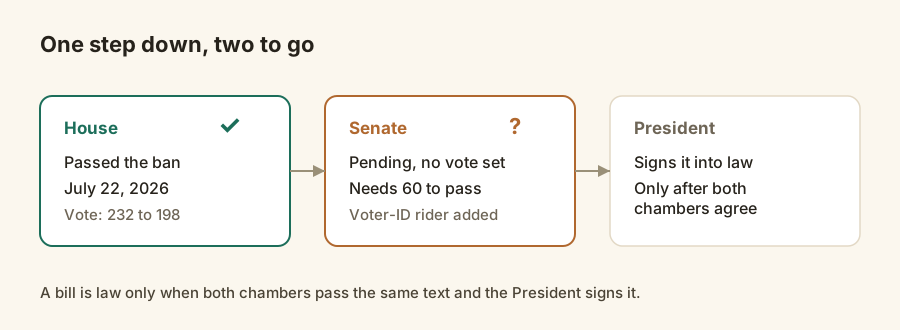
Partly, and not yet. On July 22, 2026, the House passed the Stop Insider Trading Act (H.R. 7008) by a vote of 232 to 198, which would bar members of Congress, their spouses, and their dependent children from buying individual stocks. But it is not law. It still needs the Senate, where a 60-vote threshold and a tacked-on voter-ID provision make its path uncertain. For now, congressional stock trading is still legal.
So the honest answer is: closer than before, still not done.
A bill becomes law only after both chambers pass the same text and the President signs it. The House is one of those steps. The Senate is the hard one, and it has not moved.
You can read the bill and its official status on Congress.gov, and the roll-call vote on GovTrack.
What would the Stop Insider Trading Act actually do?
It would stop members from buying individual stocks. The Stop Insider Trading Act, sponsored by Representative Bryan Steil, bars members of Congress, their spouses, and dependent children from purchasing individual publicly traded stocks. They could keep what they already own, but would have to post public notice 7 to 14 days before selling a covered holding. Breaking the rules brings a fine of $2,000 or 10% of the trade, whichever is larger, plus a forced sale for an illegal purchase.
Notice what it does not do.
There is no divestiture requirement, so a lawmaker holding a big position can keep it. Representative Chip Roy pushed for a stronger version that forced members to sell. It did not make the final text.
Diversified funds are still fine. The target is individual stock picking, not owning an index fund.
Here is how the proposed rules compare to the law we have now:
| STOCK Act (current law, 2012) | Stop Insider Trading Act (passed House 2026) | |
|---|---|---|
| Buying individual stocks | Allowed | Banned for members, spouses, dependents |
| Existing holdings | Allowed | Can keep; notice required before selling |
| Disclosure | Report each trade within 45 days | Public notice 7 to 14 days before a sale |
| Penalty | $200 late fee, often waived | $2,000 or 10% of the trade, plus forced sale |
| Status | Law since 2012 | Passed House; awaiting the Senate |
Can members of Congress legally trade stocks right now?
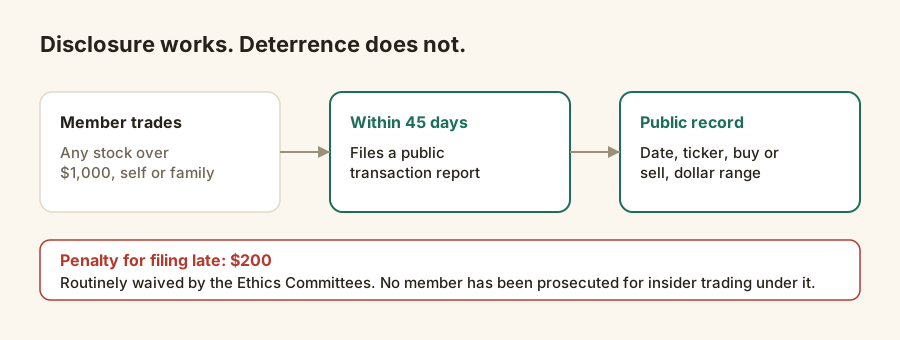
Yes. Today it is legal for members of Congress to buy and sell individual stocks, including in industries their committees oversee. The one hard rule is the 2012 STOCK Act, which says they cannot trade on material nonpublic information they learn through their job, and they must publicly disclose every trade over $1,000. Enforcement of that first part has produced almost no cases.
That gap is the whole controversy.
Trading on secret information is illegal for them, the same way insider trading is illegal for everyone else. Proving a senator acted on a classified briefing is just very hard, and it has essentially never been done.
So in practice, the rule that actually bites is the disclosure one, not the insider-trading one.
What is the STOCK Act, and why do critics call it toothless?
The STOCK Act of 2012 requires members of Congress to report any stock trade over $1,000 within 45 days, on a public Periodic Transaction Report. Critics call it toothless because the only penalty for filing late is a $200 fine that the Ethics Committees routinely waive, and no member has ever been prosecuted for trading on inside information under it. The disclosure part works. The deterrence part does not.
The $200 number is the tell.
For someone earning the $174,000 congressional salary, a $200 late fee reads less like a punishment and more like a filing fee. Reporters have flagged dozens of late or missing filings from members of both parties over the years.
The law did one thing well: it made the trades public. That is the part you can actually use.
Why is banning congressional stock trading so popular?
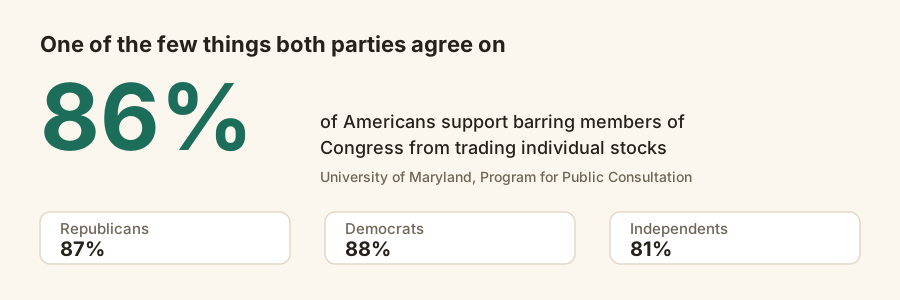
Because almost everyone agrees on it. A University of Maryland survey found 86% of Americans support barring members of Congress from trading individual stocks, including 87% of Republicans, 88% of Democrats, and 81% of independents. The worry is simple: lawmakers write the rules and sit in nonpublic briefings, so trading on the side looks like a conflict of interest even when it stays within the law.
This is one of the few issues that polls the same across parties.
You can see the breakdown from the Campaign Legal Center. Support in the mid-80s, held steady across years and surveys, is about as close to consensus as American politics gets.
That is also why the bill keeps coming back. The demand never fades, even when the votes stall.
Will the ban pass the Senate?
Unclear, and probably not soon. The House bill now goes to the Senate, where it needs 60 votes to beat a filibuster, and a voter-ID provision attached to it makes broad support harder to gather. A separate, stronger ban from Senator Josh Hawley cleared a Senate committee back in July 2025 but has sat without a floor vote since. Popular does not always mean passable.
The Senate math is the real obstacle.
Sixty votes means a chunk of both parties has to agree, on the same text, at the same time. Riders like the voter-ID provision give the other side a reason to vote no on something they might otherwise support.
So a ban is genuinely possible this Congress. It is also easy to see it stall again, the way earlier versions did.
How can you see what stocks Congress is trading?
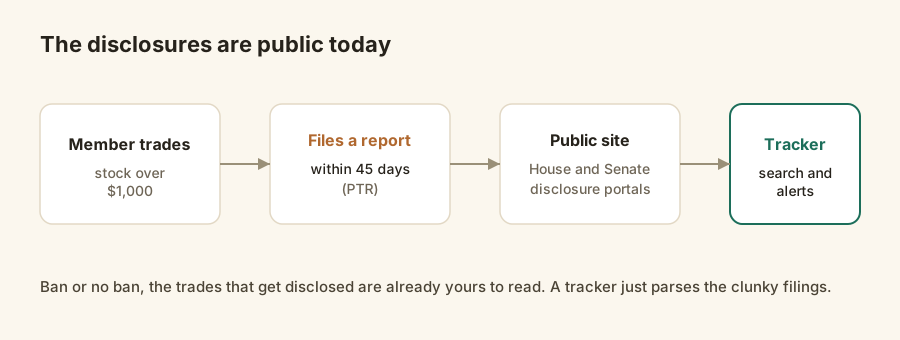
You can read it straight from the public record. The STOCK Act forces every member to file a Periodic Transaction Report within 45 days of a trade, showing the date, the ticker, whether it was a buy or a sell, and a dollar range like $1,001 to $15,000. Those filings are public on the House and Senate disclosure sites, and tools like Edgrapi turn them into a clean feed you can search and set alerts on.
This is the part that does not depend on any bill.
Ban or no ban, the trades that get disclosed are already yours to read. The raw filings are clunky, which is why a tracker that parses them is worth having.
If you want to watch the buying as it posts, the congressional trades tracker pulls straight from the public disclosures, no waiting on Washington.
What to watch next
The thing to watch is the Senate. Until it passes a bill and the President signs it, the congressional stock trading ban is a proposal, not a law, and every member can keep trading as long as they file the paperwork.
So do not wait on Washington to see what they own.
The filings are already public. Read the disclosures, follow the buying, and judge the trades for yourself.
Frequently asked questions
Did Congress ban stock trading?
Not yet. In July 2026 the House passed the Stop Insider Trading Act, which would ban members of Congress from buying individual stocks, but it still needs the Senate and the President's signature to become law. As of now it has cleared only one of the three steps, so members of Congress can still legally trade.
Is it illegal for members of Congress to trade stocks?
No. Members of Congress can legally buy and sell individual stocks today, including in industries their committees oversee. The 2012 STOCK Act only bars them from trading on material nonpublic information they get through their job, and requires them to disclose every trade over $1,000. Trading itself is legal; hiding it or trading on secrets is not.
What is the STOCK Act?
The STOCK Act is a 2012 law that requires members of Congress to publicly report any stock trade over $1,000 within 45 days, and bars them from trading on nonpublic information learned through their office. It made congressional trades public, which is what makes tracking them possible, but its only real penalty is a $200 late fee.
What is the penalty for a member who violates the STOCK Act?
The standard penalty for filing a trade late is a $200 fine, which the House and Senate Ethics Committees often waive. For a member earning $174,000 a year it works more like a processing fee than a deterrent. No member of Congress has ever been criminally prosecuted for insider trading under the STOCK Act.
How can I see what stocks Congress is buying?
Every member must file a Periodic Transaction Report within 45 days of a trade, and those reports are public on the House and Senate disclosure sites. Each one shows the date, the ticker, whether it was a buy or a sell, and a dollar range. A tracker parses these filings into a searchable feed so you do not have to read raw PDFs.
Will the congressional stock trading ban become law?
It is uncertain. The bill passed the House but faces a 60-vote threshold in the Senate, and a voter-ID provision attached to it makes broad support harder. A stronger Senate ban has sat in committee since July 2025 without a floor vote. Public support is around 86%, but popular bills still stall on Senate math.